
Clean Water Starts Here: The 6 Steps of Treatment
Dec 24, 2025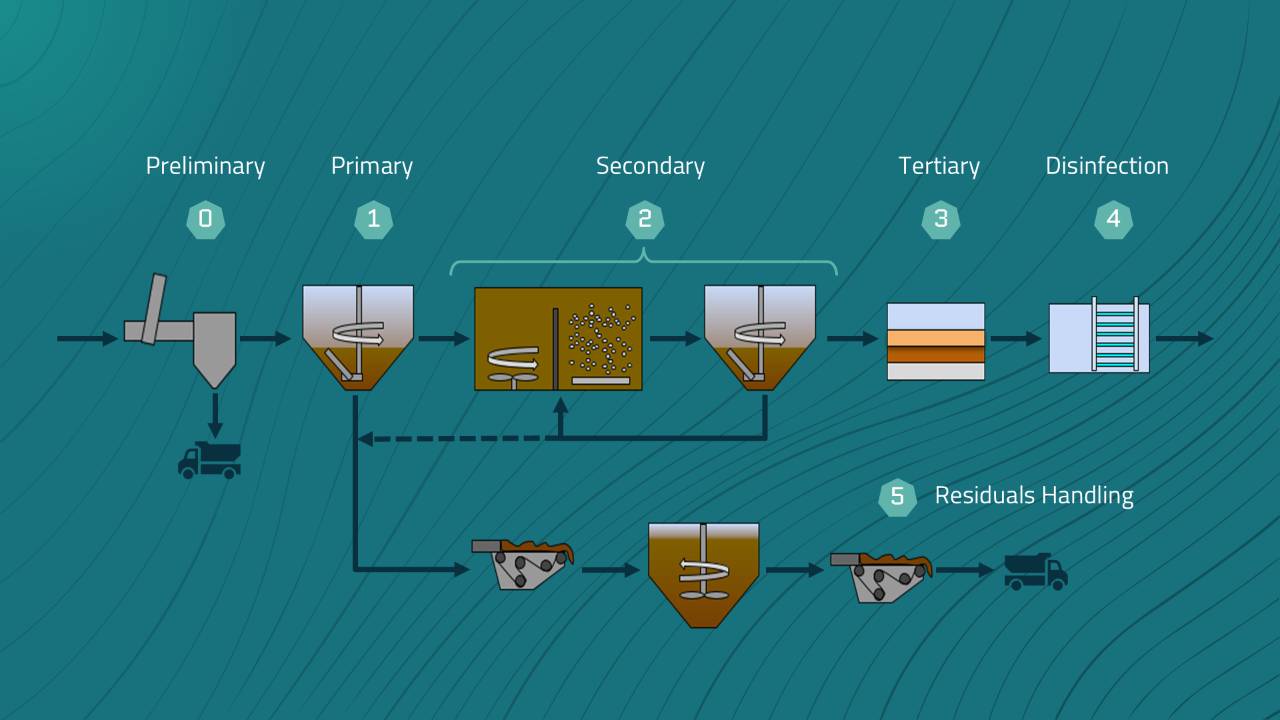
Understanding the major steps in wastewater treatment is essential for sustainable team/facility management and individual professional growth. Ultimately, for a facility this knowledge translates into permit compliance, cost efficiency, and proper emergency response. Conventional treatment includes six basic components which are illustrated in the figure above and summarized as follows:
- Step 0 - Preliminary treatment. The purpose of this step is to protect downstream equipment. We use mechanical devices to remove large debris.
- Step 1 - Primary treatment. The purpose of this step is to remove settleable solids. We typically use gravity to do the work of removing stuff and producing a cleaner waste stream.
- Step 2 - Secondary treatment. The purpose of this step is to remove soluble pollutants (e.g. BOD, Ammonia). We use living microorganisms to do this.
- Step 3 - Tertiary treatment. The purpose of this step is to remove a little more TSS. We typically use physical separation processes like sand or cloth filters to do this.
- Step 4 – Disinfection. The purpose of this step is to remove pathogens. Chlorine and UV are two common technologies used to eliminate these disease-causing organisms
- Step 5 - Residuals handling. The purpose of this step is to treat byproducts produced in Steps 2-3. We can use a wide range of equipment and processes to do this. The types of equipment used are often determined by the end use of the product.
A solid understanding of treatment Basics like this keeps operations teams grounded. For those new to the industry, this information is the foundation of future knowledge and skills in a very rewarding career. For more senior professionals, it can be a welcomed refresher in an industry that is constantly changing/ evolving. I have numerous courses that cover the basics of wastewater treatment, and am pleased to offer 20% off for a limited time. Download it here.